

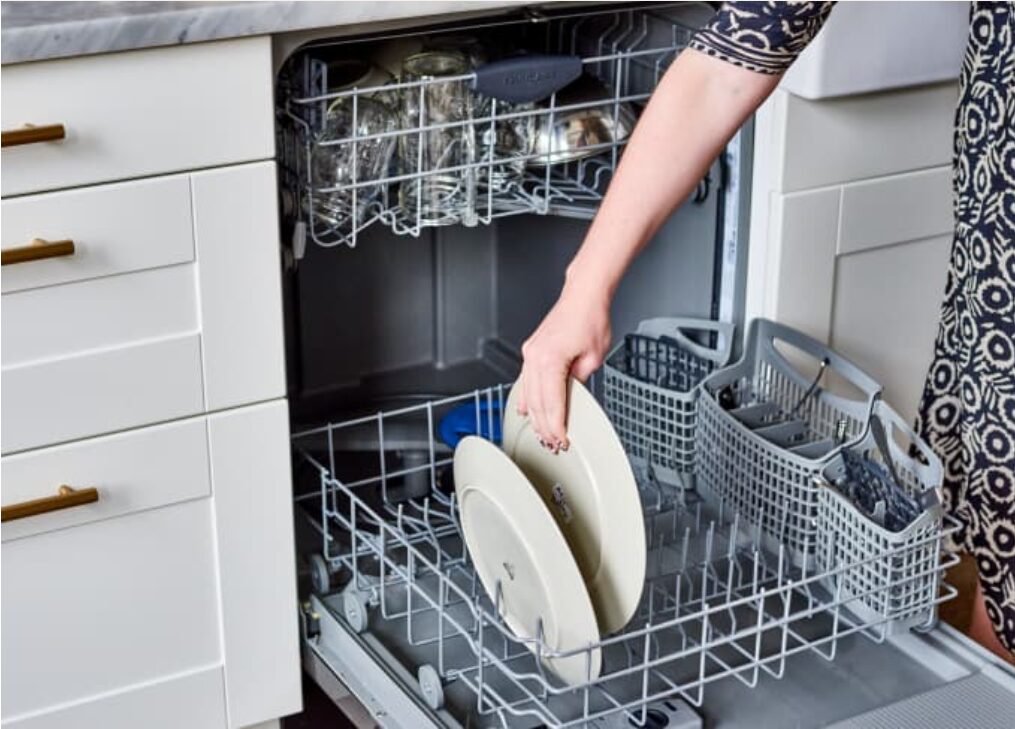
1. Why “The Detergents Plumbers Use Most Often” Are Worth Considering
Those who frequently work with dishwashers and drain pipes know exactly which products are truly worry-free and which can quietly cause trouble.
For them, a good detergent is more than just getting the dishes clean; it must also: dissolve completely, leave no residue, reduce limescale and grease buildup, and minimize clogging of the plumbing and machine.
Plumbers often compile statistics while repairing machines: which detergents are consistently associated with severe scaling and clogging; and which brands consistently keep their machines clean and running smoothly.
These firsthand observations gradually form the list of detergents they repeatedly purchase for their homes.
2. The Formulation Debate: Capsules, Powder, or Gel?
In recent years, the market share of traditional powdered detergents has been declining, while pre-packaged dishwasher “capsules” (or detergent pods) have steadily increased, accounting for approximately 40-50% of dishwasher detergent sales in the United States.
Experience from numerous plumbers and cleaning experts also shows that high-quality capsule products often outperform most liquid and powder products in terms of cleaning power and ease of use.
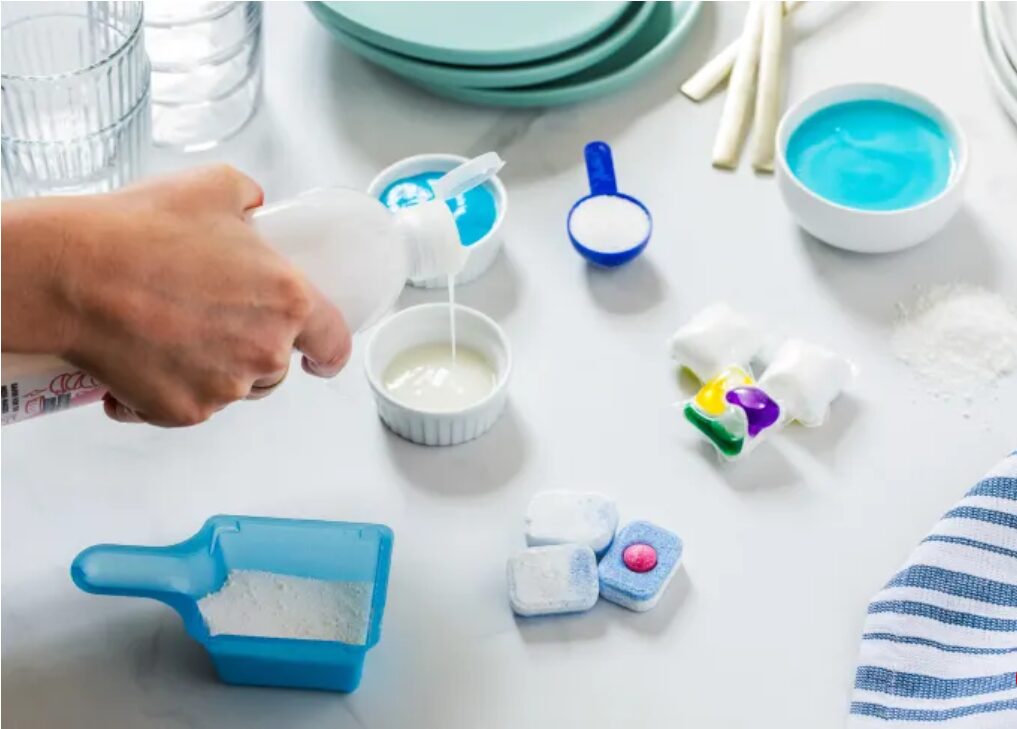
The characteristics of different formulations can be broadly summarized as follows:
- Capsules (Pods/Packs)
- Advantages: Pre-measured, less prone to misuse, generally better cleaning test results, some products combine powder and gel, offering both cleaning and dissolving speed.
- Risks: Inexpensive products may not dissolve completely if the machine’s water temperature is low or the cycle is too short.
- Gel/Liquid
- Advantages: Adjustable dosage; liquid dissolves quickly throughout the wash cycle, suitable for short cycles or low water temperatures.
- Key Points: Use the correct amount to avoid excessive foaming or residue.
- Powder
- Advantages: Generally lower price, dosage can be adjusted according to water quality.
- Disadvantages: If the water is hard or the dissolving conditions are poor, it is easy to form clumps and residue inside the machine or in the pipes.
Many plumbers generally recommend that if you are not particularly adept at adjusting the dosage and want to minimize the chance of problems, high-quality capsules are often a safer choice.
3. Core Criteria Most Important to Plumbers
When choosing dishwasher detergent, many professional plumbers repeatedly emphasize three key points:
- Complete Dissolution, No Residue
If the detergent does not dissolve completely during the wash cycle, it may adhere to the spray arms, inner tank, filter, and even the drain pipe, eventually causing blockages.
- Effectively Removes Food Residue and Grease
Detergents with insufficient cleaning power will allow food residue and grease to accumulate inside the machine, not only failing to clean dishes properly but also easily leading to odors and bacterial growth.
- Minimize Scale and Mineral Deposits
Especially in hard water areas, if detergents fail to inhibit scale buildup, it will cause watermarks and fogging on glasses and lead to scale buildup inside machines, shortening their lifespan.
Plumbers have mentioned that when repairing severely scaled or clogged machines, they specifically ask users which detergents they commonly use to determine which brands or formulations are more likely to cause problems, and then proactively avoid them in the future.
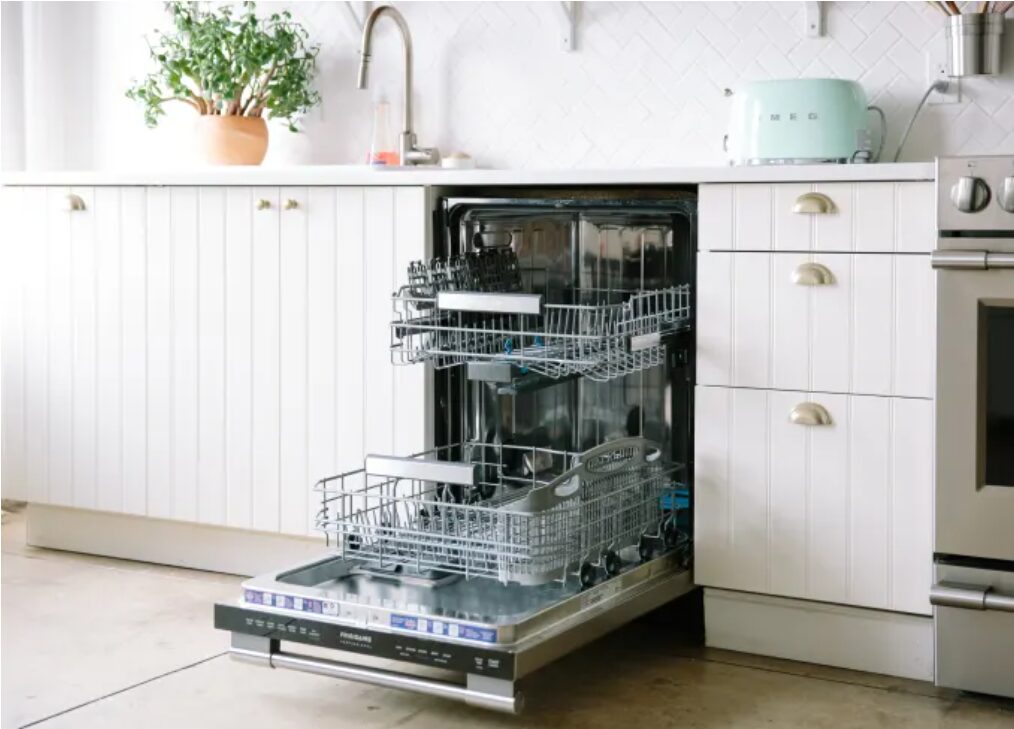
4. Several Commonly Recommended Detergent Types
Due to copyright and trademark considerations regarding brands and specific formulas, the following does not directly reproduce the full commercial names from the original text, but rather summarizes them according to function and characteristics:
1. Powder + Gel Composite Capsules
Many experienced technicians prefer the composite design of “half powder, half gel inside the capsule.”
The reason is that the powder portion is good at dealing with heavy stains and particulate residues, while the gel portion helps to quickly dissolve and break down grease. The combination of the two provides both strong cleaning power and complete dissolution. In tests, these capsules performed consistently in removing sauces, grease, and starch residues.
2. Powerful Degreasing Formula Capsules
For households that frequently grill, fry, or cook with heavy oil, plumbers specifically recommend capsule-type detergents suitable for “heavy oil environments.”
These products are commonly used to:
- Clean thick grease and burnt marks from baking trays, graters, and glass dishes
- Improve the clarity of glasses and stainless steel utensils
Some warehouse-style stores offer their own brand “high-performance capsules,” which are significantly cheaper than major brands, but have exceeded expectations in degreasing tests and user feedback, making them a cost-effective option for some plumbers.
3. Tablets/Capsules with Strong Environmental Concerns
For those concerned with environmental protection and ingredients, experts recommend environmentally friendly detergent tablets with simpler formulas, less plastic packaging, and easy biodegradability.
These products focus on:
- Reducing water pollution
- Using more sustainable raw materials
- Simplified, recyclable, or biodegradable packaging
While some eco-friendly products may be slightly less effective than strong formulas for extremely heavy oil or stubborn stains, many plumbers believe they perform “quite well” for “normal moderate soiling + proper filling.”
4. Easily Soluble Gel Detergents
Some professionals insist on using liquid or gel detergents, not because they are the strongest, but because they are the most “controllable.”
They value:
- The dosage can be adjusted flexibly according to the number of dishes loaded, the level of soiling, and the local water quality.
- Gels dissolve quickly and fully participate in the entire wash cycle, especially suitable for short cycles or low-temperature modes.
- In the long run, they are relatively gentle on machines and pipes, reducing the risk of malfunctions due to the accumulation of undissolved particles.
However, using gels requires confidence in one’s ability to “be gentle”—overuse can increase residue and foam buildup.
5. How to Choose Based on Your Own Usage
Based on plumbers’ advice, when purchasing and using dishwasher detergent, you can consider the following factors:
- Water Quality
- Hard water areas: Prioritize capsules or tablets with anti-scaling and anti-water stain properties; use a dedicated rinsing agent if necessary.
- Soft or neutral water: Most capsules and gels will function normally; choose based on price and habits.
- Dietary Habits
- Frequent heavy-oil grilling: Choose formulas emphasizing strong oil removal; clean the filter regularly.
- Light diet: Use milder products to reduce unnecessary chemical burden.
- Machine Program and Habits
- Frequent use of short programs or low-temperature modes: More suitable for easily soluble gels or high-quality capsules.
- Habitual use of high-temperature, long programs: Most capsules and powders will be fully activated.
- Check the Machine’s “Health Condition”
- If unpleasant odors, build-up of grime, or a significant decrease in cleaning effectiveness have appeared, consider:
- Replacing with a more soluble capsule or gel
- Regularly using dishwasher-specific cleaner with a high-temperature empty cycle
- Thoroughly cleaning the filter and spray arms
6. Using the Right Detergent to Extend the Dishwasher’s Lifespan
Plumbers generally agree that: A dishwasher’s long-term stable operation largely depends on two things—proper loading and choosing the right detergent.
- Choosing a detergent that truly dissolves completely, provides sufficient cleaning power, and doesn’t overly irritate the machine’s internal parts is a gentle way to be responsible with your time and money.
- Combining this with regular cleaning of the machine itself can prevent many potential problems from arising in advance.
In this way, every capsule and every press of the start button is not just about washing the dishes, but also about allowing that quietly working machine to stay in the corner of the kitchen longer.